Follow every order from confirmation to completion.
Give customer service and warehouse teams a shared order record, with the product details and stock impact needed at each stage.
Give customer service and the warehouse the same order story.
For a team handling storefront and marketplace orders, unclear allocation and shipment status can lead to repeated checks and manual corrections.
What to ask us to demonstrate
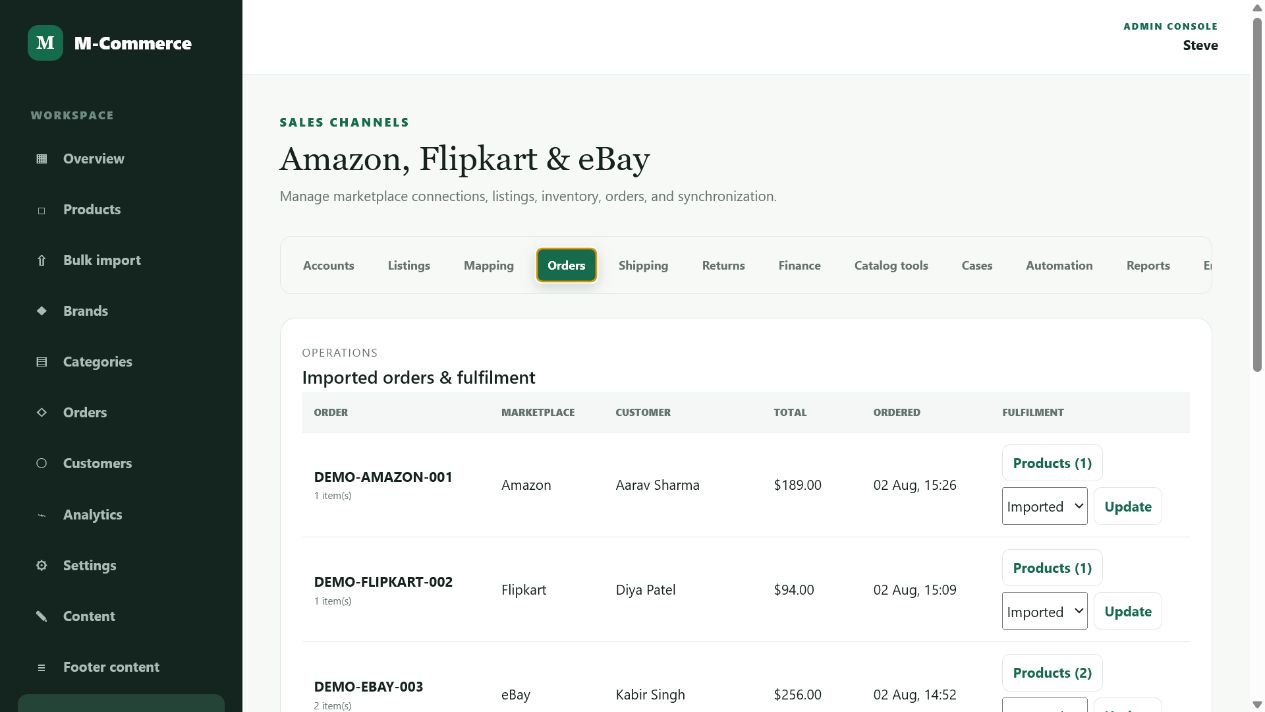
Follow one sample order from line-item review to allocation and tracking. Then test a repeated confirmation and an eligible cancellation to check the stock impact.
Prepare a useful first conversation
Tell us your approximate catalogue size, sales channels, warehouse locations and the manual task you want to reduce. We will agree the required connectors, data migration and acceptance checks before you commit.
Keep the line items with the order
Review product names, SKUs, variants, quantities and amounts before allocating inventory. Preserve billing and shipping details with the order so later account edits do not silently change the original delivery instructions.
Allocate once and move through clear stages
A useful fulfilment flow makes the next action visible: review the order, confirm stock, prepare the shipment, record tracking and follow delivery status. Stock deductions must be transactional and protected against repeated confirmation requests.
- Review the order and verify its line items.
- Confirm available inventory and allocate stock.
- Record packing, carrier and tracking information.
- Update shipment status and notify the customer.
Handle exceptions as part of the workflow
Insufficient stock should stop an invalid allocation. Eligible cancellations should release reservations or restore deducted stock exactly once. Returned units may need inspection before they become available again. Keep an audit trail for each change so finance and operations can reconcile the same order.
Distinguish records from provider actions
The demo can show shipment records and payment simulations. Purchasing courier labels, scheduling carrier pickups, collecting payments and executing refunds require the relevant live APIs and verification. Configure notification delivery separately and test recipients before a production launch.
Common questions
Are the demo card and UPI payments real?
No. Demo authorization does not collect money. Production payment processing requires provider credentials, server verification and webhooks.
Can orders share warehouse stock?
The application connects own-site and marketplace order workflows to stock records. Validate allocation, reservation and retry behaviour during your production acceptance tests.
See how the workflow fits your business.
Tell us about your products, warehouses and sales channels. We will confirm the setup and integration scope before activation.